Showing posts with label Rolls-Royce. Show all posts

Tuesday, August 16, 2011

Rolls-Royce

Rolls-Royce-Phantom

CAR REVIEW | Rolls-Royce | royce rolls phantom, car rolls royce, rolls royce engine, hire rolls royce, rental rolls royce, limo rolls royce, limousine rolls royce - Rolls-Royce is an automobile mark produced by Rolls-Royce Motors. Rolls-Royce Motors was created by the demerger of the Rolls-Royce car businessfrom Rolls-Royce Limited in 1973. The original Rolls-Royce Limited had been nationalized in 1971 due to the financial collapse of the company, due in part to the development of the RB211 jet engine. In 1973, the British government sold the Rolls-Royce company to allow the parent nationalized Rolls-Royce Limited (1971) to focus on the manufacture of jet engines.

Rolls-Royce is based in London. Rolls-Royce powered aircraft for the Allied planes in World War I World War II, built engines for the company has made a material contribution to the war effort as it powered the Hawker Hurricane and the Spitfire of the Battle of Britain against the comparison German Messerschmitt and Junkers. Royce, the company's founder, was not a wealthy family in the front or the privilege of an elite education, but has created one of the most famous cars with hard work and applying his engineering skills was an apprentice at the factory . Although not generally regarded as a race car, Rolls Royce is known for setting several world records for speed in cars driven by Sir Malcolm Campbell. As the largest civil aircraft engines in the world, the company facilitating the global movement and global change in the modern world. The name of the company and the products are synonymous with precision engineering and the whole world.


Rolls-Royce-Phantom-drophead-coupe
Rolls-Royce Phantom 2011

In 1884 Frederick Henry Royce started an electrical and mechanical activity. He got his first car, "Royce" at its plant in Manchester in 1904. It was presented to the Honourable Charles Stewart Rolls, son of Eton and Cambridge-educated Baron Llangattock of the first in the Midland Hotel in Manchester on 4 May the same year and the couple agreed to a deal in which Royce would manufacture cars to be sold exclusively by Rolls. Rolls was already importing and sales of French cars and established one of the first successful car dealers in England. He had considerable business acumen. A clause was added to the contract, which provides cars would be called "Rolls-Royce." The Company was incorporated March 15, 1906 and moved to Derby in 1908. The partnership was successful. Royce not only designed for a high level, but insisted that high standards were maintained by staff and instituted a quality control system.

Rolls was also an amateur pilot (which may have influenced the look Royce aircraft engine design) and broke several records. Tragically, he died in a plane crash June 2, 1910.


Rolls-Royce-Phantom-drophead-coupe
Rolls-Royce Phantom Drophead Coupe 2011

The Silver Ghost (1906-1925) was responsible for the company's early reputation. It had a 6-cylinder engine; 6173 cars were built. In 1921, the company opened a second factory in Springfield, Massachusetts (in the United States to help meet demand), where a further 1701 "Springfield Ghosts" were built. This factory operated for ten years, closing in 1931. Its chassis was used as a basis for the first British armored car used in both world wars.

In 1931, the company acquired rival car maker Bentley, whose finances were unable to weather the Great Depression. From then until 2002, Bentley and Rolls-Royce cars were often identical apart from the radiator grille and minor details.


Rolls-Royce-ghost-2011
Rolls-Royce Ghost 2011

In 1933, the color of the Rolls-Royce radiator monogram was changed from red to black because the red sometimes clashed with the coachwork color selected by clients, and not as a mark of respect for the passing of Royce as is commonly stated.

Rolls-Royce and Bentley car production moved to Crewe in 1946, and also to Mulliner Park Ward, London, in 1959, as the company started to build bodies for its cars for the first time: previously it had built only the chassis, leaving the bodies to specialist coachbuilders.


Rolls-Royce-ghost
Rolls-Royce Ghost 200EX 2011

Rolls-Royce engines reached speed records on land and in the air. In 1931, an entry in the Schneider Trophy Competition Rolls-Royce International established a new world speed record of 400 mph air. It was the first of several speed records on the air. On February 22, 19 232 in Daytona Beach, Florida Sir Malcolm Campbell set the land speed record driving his Rolls Royce Bluebird power. On March 2 and September 3, 1935, Campbell broke his own record again at the wheel of a Rolls Royce motor car.


Rolls-Royce-Limousine
Rolls-Royce Limousine

Tags: rolls-royce, rolls royce in, royce rolls, rolls royce phantom, royce rolls ghost, rolls royce price, rolls royce car, rolls royce motor, rolls royce engines, rolls royce hire, rolls royce rental, rolls royce shadow, rolls royce coupe, rent rolls royce, rolls royce limo, rolls royce rentals, rolls royce limousine

Wednesday, July 27, 2011

Rolls-Royce Ghost [Reviews]


Rolls-Royce Ghost is the most powerful car that Rolls-Royce Motor Cars has ever produced. However, Rolls-Royce power is delivered in a very different manner to other cars. It arrives in an elegant, cosseting way that some have described as being designed to lower the pulse, not raise it

The principle of simplicity extends to the act of driving Rolls-Royce Ghost. The host of complex engineering software and technologies beneath the surface serve to create driving easier and more enjoyable, not to intrude or confuse
Rolls-Royce Ghost is more driver-focused than any Rolls-Royce car before it. The driver sits in a slightly elevated position after the wheel, described as the authority position. This makes the view of the road much clearer. The fascia has been kept deliberately clear; it is spacious in design and has an intuitive layout. The controls are neatly sculpted, with the more important functions emphasised by accents of chrome. The soft light of the instrument panel glows through the familiar black-rimmed steering wheel, which in turn employs a number of violin keys as well as an ergonomic roller-ball control

The control centre display is concealed after a veneered panel until its services are called upon. All features such as satellite navigation, telephone, communication and entertainment functions are displayed here and managed via a central rotary controller, flanked by quick-access buttons on the front centre console

The optional driver assistance systems and technologies in Rolls-Royce Ghost are notable for their discretion and ease of operation. From the moment the driver approaches the car, optional Comfort Entry allows simpleaccess, unlocking the doors once the key fob is within 15. metres and the cool chromed handle is grasped.when you are in the car, voice control allows you to select from the control systems menus without using the central controller

For ease of manoeuvring, cameras located about the car serve a number of purposes. Rear, front side and top view cameras may combine to give a fish-eye view at blind junctions or provide ground images with obstacle recognition and reverse path prediction once parking

Positioned discreetly within the grille is a Night Vision camera. once activated, this safety feature works with Pedestrian Recognition to detect objects up to 300 metres away and display them on the central screen in the dash. The car's. control system receives infrared heat images from the camera and, taking into account the car's. speed and direction, classifies them to assess imminent danger. It then determines what action, if any, needs to be taken and if necessary displays a warning to the driver

The Head-up Display relays crucial information such as speed or navigation directions onto the windscreen directly in front of the driver. This information is visible only to the driver and may be tailored to show only the details required and at a position suitable to the driver
Lane Departure Warning alerts the driver should the car start to drift out of its current lane. once activated, it uses an integrated camera, located just in front of the rear view mirror, to monitor road markings and the vehicle's. position. The driver is warned by a discreet vibration through the steering wheel. If the driver uses the directional indicators before and behind the lane change, the wheel will not vibrate

High Beam Assistance automatically manages the operation of dipped and main beam lights while driving at night. once activated, the same camera used by the Lane Departure Warning system monitors the light from any source at the front of the vehicle and automatically dips or raises the headlights accordingly. Adaptive, directional headlights also improve illumination of the road ahead and adapt to the road conditions, be they rain or fog or simply once the car is making a turn
Active Cruise Control with Stop

Thursday, July 7, 2011

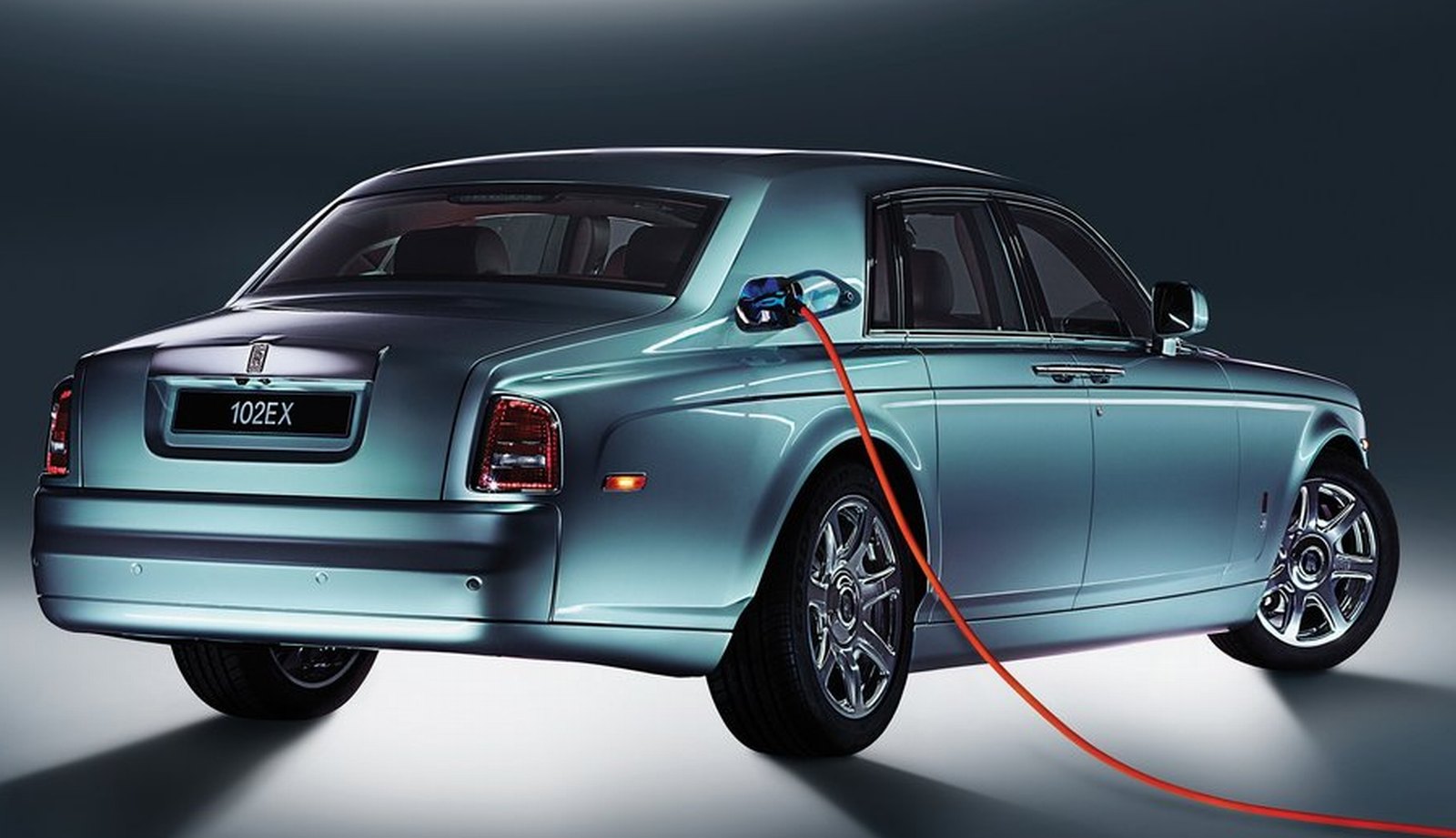
Rolls-Royce 102EX Concept Electric (2011)


Rolls-Royce Motor Cars is proud to present the Rolls-Royce 102EX, a machine, which is one of the most important initiatives in the company in recent years. It 'the first electric car battery for ultra-luxury segment, and continue the tradition of experimental model of cars passing generations.

Rolls-Royce produces cars that represent the pinnacle of luxury cars in the world for the most demanding customers. However, the company also recognizes the need to look ahead and plan for the long-term sustainable growth. The study alternative options for the transmission of power is an important step in this process.
With Rolls-Royce 102EX, which is also known as the Spirit experimental electrical (EE) is the company's intention to thoroughly test the opinions and reactions of different powertrain options with a wide range of stakeholders, including owners, fans, members of the public and the media.

Throughout 2011 Phantom EE will act as a test of work that provides property, VIPs, media and fans the opportunity to discover an established alternative powertrain technology, and feedback about their experiences, thoughts and their concerns directly.

Bank of research from a comprehensive training program which includes Europe, Middle East, Asia and North America will be the major decisions that affect the alternative drive-trains for cars Rolls-Royce.

There are no plans to build a production version of this car. Phantom EE role is as a test that is designed to explore the technologies BEV set to ask and answer questions.

Can the Phantom EE provide an acceptable range for clients without repetitive charging? It is the confidence in his ability to operate in extreme conditions? It will be the reliability and quality should be the expectations of the world's leading automotive brand?

Phantom EE also raises more fundamental questions: is a fully electric traction can provide an authentic experience of Rolls-Royce for customers, an experience that really suits the brand?

It's all-electric, or another option is the option for Rolls-Royce will become clearer when the test program is completed by the end of the year.

Rolls-Royce 102EX - Phantom EXPERIMENTAL Electric (EE)

Reinvention is part of the Phantom is a timeless and EE is the last line of experimental vehicles, Rolls-Royce Motor Cars. It is based on the legacy of 1919 and 1EX.
Experimental models used to test and evaluate new technologies and applications that can shape the future of Rolls-Royce products. Unlike a concept car, Rolls-Royce experimental models are still fully functional, drivable vehicles using concrete materials such as wood, leather and metal instead of clay and foam or other concepts.

They have engineers and designers with the possibility of innovation in the real world and is used not only to introduce new components and technology, but also to evaluate them.

The latest in this line of experimental projects, began with a Rolls-Royce Phantom, a car clearly modern and impeccably balanced, where high technology and craftsmanship combine to produce something extraordinary.

EE ghost car is equipped with an innovative aluminum space frame, so important to the dynamic capabilities, and a sense of calm and tranquility to enjoy the passengers. However, naturally aspirated 6.75 liter V12 engine and six-speed gearbox was replaced by lithium battery and two electric motors mounted on the rear subframe. These engines are connected with a difference in speed integrated.

Each engine is rated at 145kW of power, when the ghost EE 290kW of maximum power and 800nm ​​of torque available over a broadband connection. This is comparable to the standard with a pair of 338kW 720nm Phantom delivered to 3500 rpm.

Chemical Nickel Cobalt Manganese on 230Wh/kg, high energy density is important in achieving an acceptable range between re-charges. Pre-launch testing suggests Phantom EA should work with a range of up to 200 km. Comes in a wave of torque, 0 to 60 mph is accomplished in under eight seconds (5.7 seconds in the standard Phantom) with a top speed limited to 160kph.

This is the first application of technology in a segment GKL + + (super luxury cars priced at more than € 200,000) and the battery is considered the largest ever mounted on a road car.

The valuation technique is an important part of the testing program. More fundamentally, however, a car to search for answers to questions about the Rolls-Royce owners, what their needs might be in the future into account various factors, such as area, performance and refueling infrastructure.

The response from our customers - and the media, stakeholders and fans via the website www.electricluxury.com - is essential for assessing the adequacy of the electric battery technology for Rolls-Royce.

It will help inform a decision on whether all-electric or other alternative powertrain technology that is most appropriate for best cars in the world in the future.

DESIGN

. "This is a credible concept perfectly complements the experimental nature of the car to explore the possibilities of light, space and the use of materials if we changed the overall appearance, would have lost the concept of credibility, our audience guess he was just a style. the reality of the exercise is that it is an experimental vehicle in its truest sense, challenging perceptions, feelings and values ​​-. and explore alternatives powertrain technologies "- Ian Cameron, Chief Designer, Rolls-Royce Motor Cars.

102EX carries the characteristics of the famous Rolls-Royce Phantom, which is based, such as hand crafted, indicating good and iconic design cues such as the Pantheon, the grille and the Spirit of Ecstasy, which will celebrate its centenary in 2011. But at the heart of its design is the heart of the experimental vehicle to the location of this car in a test-bed, but subtly referring to the power station.

The design creates a different look, experiment with an interior space and materials, as well as seating and lighting. These are organized around functional considerations of a battery of Rolls-Royce - the car's behavior is likely to be used and the changes that technology brings in terms of interior and exterior details. Naturally, these changes are implemented in a way that maintains references to the car like a Rolls-Royce.

ATLANTIC CHROME EXTERIOR

Our designers were challenged to create the finishing Phantom EE immediately took a special machine, is separated from the standard model of the Phantom, in the absence of many of the structural changes in the open field. It is not an easy task, because all Phantom models are special - our clients benefit from the various options of about 45 000 custom paint colors.

Extensive investigations revealed, however, the reflective coating of ceramic nanoparticles. Under the microscope, they mimic the look of silver metal, but between 8000 and 80,000 times smaller than the thickness of your hair, or 1,000 times smaller than the size of a normal metal particle.

The specimens were produced and the design team were impressed with the results, knowing that addresses the most, the better. But they had no illusions about the task at hand.

All four layers of paint were needed pm, four Atlantic Chrome, and many hours of time spent to ensure a perfect finish. The finish is amazing. EE ghost commands at a point where almost chiseled taut lines give the impression of a car wet. It grows only in the nature of light to change.

Reload external point

Recharging is done with a five-pin plug, which replaces the normal mechanism fueling Phantom.The CAP standard was replaced by a design with a transparent window that shows the RR logo and pattern 102EX. Batis rear LED lights forming load condition of the car.

At startup, the connector is bathed in blue light. It starts flashing when charging begins. Once fully charged, the screen turns green, then blink, as the solenoid is deactivated. Any system failure is indicated by the steady or flashing red.
Charging can be stopped with a switch next to the plug. The process can also be used inside the vehicle using the controls below the center console, for example, when the induction charging takes place.

BATTERY

Phantom EE is believed that the larger battery of the car world. Peak current is 850A, 338V DC delivered. The total capacity is 71kWh.

The package consists of cells of large size bag MR. NMR (lithium-nickel-cobalt-manganese oxide) is a variant of the lithium-ion chemistry that has very high energy and power.

Phantom EE battery module houses five cells, 38 cells of the module, the module of 36 cells, and smaller than three, ten, eight and four arranged in different orientations within the irregular shape of the machine. This is similar to the general shape of the original engine and transmission.

Each of the 96 cells for further testing before installing the modules to define their characteristics and capabilities. Subsets were further tested under load to verify that the connections between each cell to perform an analysis.

Electronic identification units for each group of cells has been tested and calibrated before installation and through rigorous system of temperature cycles is intended to cause the failure of weaker parties. The electronic box, which contains the wiring and control equipment have been tested in isolation from other components to ensure proper operation.

Three separate load units (3 kW each) are equipped with battery, allowing two-phase (20 hours) or three load steps (8:00) for a car that is unique. A fourth induction charger is also equipped to allow wireless charging technology is being tested in U.S. Phantom.

The battery should last three years, have been can be used on a daily basis. Part of the program, however, test this hypothesis in a real environment, and provide a more robust battery life.

Induction charging

Concern over the lack of refueling infrastructure available in the city is well documented in electric cars, and critics suggest the extra effort after connected between the power source and vehicles.

To present to the owners of Rolls-Royce, with a view to a possible solution to these problems, U.S. Phantom test a technology called charging by induction. This allows the load to be carried out without any physical connection, offering greater convenience for owners and refers to the possibility of charging network for remote installations.

There are two parts to induction charging, the pad transfer on the ground that produces electricity, the source and the induction of the pad mounted under the car, under the battery of EE Phantom. The power spectrum is magnetically coupled to all these pillows transmissions.

The system is about 90 percent effective when measured from AC to battery and is tolerant to misalignment of parking. For example, it is necessary to align the phantom transceiver and inserts for loading to take place exactly. While the pads are capable of transmitting power over gaps of up to 400 mm, for Phantom EE, the separation is in the region of 150 mm.

Coupling circuits are regulated by the addition of compensation capacitors. Pickup coil in the receiver of the pavement are magnetically coupled to the primary coil. The power transfer is achieved by optimizing the coil pick-up the operating frequency of the primary coil with a capacitor in series or parallel.

The driver of pick-up is an essential part of the technology because it takes power from the keyboard of the receiver and battery provides a controlled output. You need to provide an output that is independent of the load and the separation between the pads. Without a controller, increase the gap voltage is reduced and the fall that the increased current load.

The transmitter is built pad to protect the Earth's magnetic fields to prevent EMI output to third parties, and the system works well internationally agreed limits.